
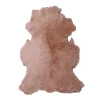
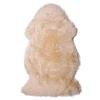
If you’re preparing for your baby’s arrival, you’ve probably seen “sheepskin rug” popping up on must-have lists. Why do so many experienced parents and experts recommend it? Does your newborn really need one? Let’s cut through the hype and answer this from a practical, parent-to-parent perspective.
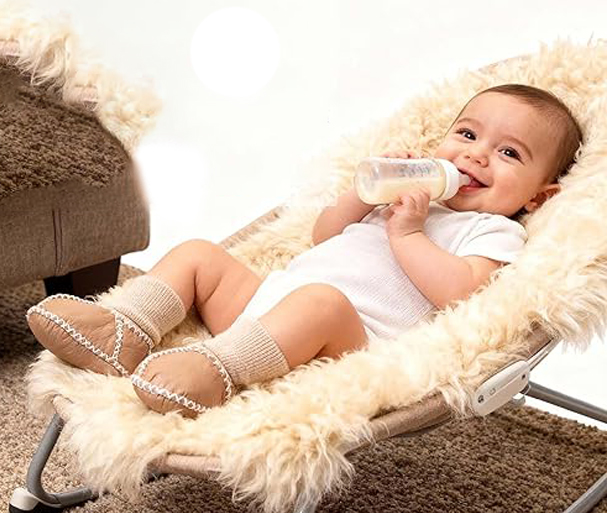
Why Do Newborns Need a Sheepskin Rug?
Because a newborn’s skin and temperature regulation system need “just-right” protection—and sheepskin delivers that naturally.
Here’s the reality about a new baby:
- Their skin is about one-tenth as thick as an adult’s.
- Their little bodies can’t regulate temperature well yet.
- They spend most of their time sleeping or lying down.
- They are incredibly sensitive to their environment.
A genuine sheepskin rug directly addresses these needs. Below are the real questions we hear from parents like you.
1. Aren’t newborns prone to overheating? Won’t a sheepskin make them hotter?
Actually, it acts like a natural thermostat.
Sheepskin fibers create tiny air pockets that insulate in winter and wick away moisture in summer. One of our customers did a simple test: at 78°F (26°C), their baby’s back felt slightly damp on a cotton blanket but remained dry and cool on a sheepskin. This is precisely why hospitals in countries like Australia and New Zealand often use them for newborn care.
2. With such sensitive skin, won’t wool be irritating?
High-quality, baby-grade sheepskin is often gentler than many fabrics.
The secret is in the sourcing and processing. The pelts we select for newborns come from the lamb’s prime areas and are vegetable-tanned. This means:
- The natural lanolin (which helps resist bacteria) remains.
- The fiber tips are soft and curly, not prickly.
- The pH is balanced to be compatible with delicate skin.
This is why many parents of babies with eczema or sensitivity find their little ones rest more comfortably on sheepskin.
3. Is it a nightmare to clean and sanitize?
It’s often easier than dealing with a spit-up-soaked cotton blanket.
Spit-ups and leaks happen. Sheepskin handles them well because:
- Liquids don’t soak in immediately, giving you time to blot.
- Its natural properties resist odor-causing bacteria.
- Proper washing restores its fluffiness.
Pro Care Tip: Hand wash in cool water with a drop of baby shampoo → press out water with a towel → Lay flat to air dry in shade (this is crucial!). It takes about 24 hours to dry but typically only needs a full wash every 2-3 months.
4. Is it safe? This is my biggest concern.
Safety is all about correct use.
Think of it as a mat, not a blanket.
- ✅ DO: Use it as a breathable layer on top of the crib mattress.
- ✅ DO: Use it as a play mat or tummy time surface.
- ✅ DO: Use it as a liner in the stroller or car seat.
- ❌ DON’T: Use it as a loose blanket in the crib for unsupervised sleep.
This is why it’s considered a safe choice—when used correctly, it provides a cushioned, non-slip, and breathable surface.
5. How do I actually use it, and how long will it last?
You’ll get years of use from one rug.
- 0-3 months: Swaddling/dressing mat, tummy time pad.
- 3-12 months: Crawling mat, stroller liner.
- 1 year+: Toddler bed topper, cozy nap rug.
Over 70% of our customers use their sheepskin for more than two years. That’s why, in the long run, it can be a cost-effective baby essential.
6. How do I choose a good one for my newborn?
Follow this simple checklist:
- Feel the Density: Look for a consistent, medium pile (about 0.4-0.6 inches thick). Too thick can be too warm; too thin lacks cushion.
- Check the Smell: It should have a mild, natural leather scent—no strong chemical odors.
- Look for Certifications: Trusted labels like OEKO-TEX Standard 100 ensure it’s free from harmful substances.
- Ask About Origin: Sheepskins from New Zealand and Australia are renowned for their consistent, high quality.
7. Are there times NOT to use it?
Yes, a few:
- If your baby has a diagnosed, severe wool allergy (this is rare).
- If your baby has a fever or is otherwise unable to regulate their temperature.
- In any unsupervised sleep situation (as with any loose bedding).
When in doubt, always consult your pediatrician.
8. Beyond the practical stuff, what’s the real benefit?
It provides “transitional comfort.”
Many parents notice their baby settles more easily on sheepskin. This might be because:
- The soft, yielding texture mimics the gentle pressure of the womb.
- The familiar scent and feel offer security.
- The stable temperature minimizes disruptive discomfort.
The Honest Bottom Line for Expecting Parents
So, does your newborn need a sheepskin rug?
The answer depends on what you value most.
Consider it if you prioritize:
- A natural, breathable surface for your baby to rest and play on.
- A durable product that will grow with your child.
- Helping regulate your baby’s temperature for more settled sleep.
- A hygienic material that’s naturally resistant to dust mites and easy to clean.
If these points resonate, a premium sheepskin rug could be one of your most-used and valued baby items.
If you just need “a blanket,” there are plenty of other less expensive options.
The right choice isn’t about the price tag—it’s about what works for your baby’s needs and your peace of mind. The enduring popularity of sheepskin across generations and cultures speaks to a simple truth: it meets a newborn’s most fundamental needs for natural warmth, gentle comfort, and secure, breathable coziness.