
March 2026 | Industry Insights · B-end Procurement Guide
Pressure ulcers remain one of the most persistent challenges in aged care—affecting patient quality of life and consuming significant nursing resources. With the global population aging rapidly and care quality standards tightening, aged care providers are re-evaluating their prevention strategies.
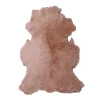
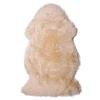
One traditional material is gaining renewed attention: sheepskin. And if you’ve been researching pressure care solutions, you’ve likely come across the term “medical sheepskin” —a category often associated with clinical-grade products. While we focus on high-density, high-resilience sheepskin, our products deliver the same measurable value in professional care settings, without the regulatory complexity of medical certification.
Why Sheepskin Works in Care Settings
1.1 Key Advantages of Sheepskin
| Property | Care Value |
|---|---|
| Natural fiber structure | Wool fibers are naturally crimped and elastic; they compress under pressure and recover, creating a continuous pressure-redistributing layer |
| Breathability | Wool can absorb up to 30% of its weight in moisture without feeling damp, helping keep skin dry |
| Moisture regulation | Absorbs moisture while releasing heat, maintaining a stable microclimate |
| Shear reduction | The natural scale structure of wool reduces friction between skin and contact surfaces |
1.2 What Makes High-Density Sheepskin Different
| Attribute | Standard Sheepskin | High-Density Sheepskin |
|---|---|---|
| Fiber density | Loose; prone to matting | Tight and uniform; strong resilience |
| Pressure distribution | Limited | More even dispersion; reduces localized pressure points |
| Durability | Performance declines after months | Maintains performance over longer periods |
| Best use case | Short-term comfort | Long-term care; higher-risk individuals |
1.3 Comparison with Alternative Materials
| Material | Advantages | Limitations |
|---|---|---|
| Alternating air mattresses | Effective pressure redistribution | Requires power; noise; maintenance cost |
| Foam pads | Low cost; lightweight | Compresses over time; poor breathability; short lifespan |
| High-density sheepskin/ wool pressure pad | No power needed; breathable; washable | Higher initial cost; requires maintenance |
Sheepskin’s natural properties—pressure distribution, moisture management, and shear reduction—make it uniquely suited for care settings.
Clinical Evidence – What Research Shows
2.1 Key International Studies
| Study | Population | Key Finding |
|---|---|---|
| Jolley et al. (2004) | 441 hospital patients (Australia) | Sheepskin group: 9.6% ulcer incidence vs. 16.6% in control group (42% risk reduction) |
| Mistiaen et al. (2010) | 1,281 nursing home patients (Netherlands) | Sheepskin group: 5.4% incidence vs. 12.2% in control group; statistically significant reduction |
| Cochrane Review (2015) | 12,517 participants across 40 RCTs | Pressure-redistributing surfaces, including sheepskin, reduce pressure ulcer risk |
2.2 Consensus and Considerations
Where consensus exists:
- Sheepskin’s physical properties (breathability, pressure distribution, shear reduction) are theoretically beneficial for pressure ulcer prevention
- Multiple clinical trials show positive effects
- Sheepskin is included in care guidelines across several countries as an optional intervention
Where nuance matters:
- Study quality varies; some trials have smaller sample sizes
- Sheepskin quality varies significantly; outcomes depend on product quality
- Requires regular cleaning; maintenance costs higher than disposable alternatives
Clinical evidence supports sheepskin’s effectiveness, but quality is the critical variable. High-density, high-resilience sheepskin is more likely to deliver expected results in professional care settings.
2.3 Common Clinical Applications
| Setting | Application | Target Population |
|---|---|---|
| Bed-bound patients | MSheepskin mattress overlay, heel protectors | Long-term bed rest; limited mobility |
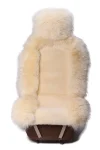
| Wheelchair users | Seat cushions | Extended sitting; reduced mobility |
| High-risk areas | Elbow and heel protectors | Bony prominence pressure points |
| Post-operative care | Positioning pads | Patients recovering from surgery with extended bed rest |
Global Market Trends – Opportunities for Sheepskin in Aged Care
3.1 Market Context
| Indicator | Data/Trend |
|---|---|
| Global population aged 65+ | Projected to reach 1.6 billion by 2050 (OECD) |
| Pressure ulcer prevalence | 5-15% in healthcare settings; higher in aged care facilities |
| Treatment cost per ulcer | Thousands to tens of thousands of dollars per case |
These numbers mean: demand for effective pressure ulcer prevention will continue to grow.
3.2 Market Positioning of Sheepskin
| Product Type | Cost | Maintenance | Best Fit | Sheepskin’s Competitive Edge |
|---|---|---|---|---|
| Alternating air mattresses | High | Low (equipment maintenance) | High-risk patients | — |
| Foam pads | Low | Low (frequent replacement) | Short-term use | — |
| Sheepskin | Medium-high | Medium (regular washing) | Low-to-moderate risk patients | Comfort, breathability, no power required |
Market opportunity: For low-to-moderate risk patients, or in settings where comfort and prevention are equally important, high-quality sheepskin offers a differentiated value proposition.
3.3 Regional Dynamics
| Region | Market Characteristics | Opportunity for Sheepskin |
|---|---|---|
| North America | High healthcare spending; evidence-based procurement | Requires clinical data support; quality expectations high |
| Europe | Aging population; strict care standards | Can qualify for inclusion in care supply catalogs |
| Australia/New Zealand | Strong sheepskin culture; mature supply chain | High natural awareness; but competition is established |
| Asia-Pacific (Japan, Korea) | Rapidly aging; growing premium care segment | Position as premium care product |
| Middle East | Emerging luxury aged care facilities | Opportunity as a “quality care” feature |
Selecting Sheepskin for Care Settings
4.1 Key Quality Indicators
| Indicator | Why It Matters | How to Assess |
|---|---|---|
| Fiber density | Affects pressure distribution and durability | Dense to the touch; springs back after compression |
| Thickness uniformity | Ensures consistent cushioning | Even throughout; no thin or uneven spots |
| Hide strength | Affects product lifespan | Flexible; resists tearing |
| Cleanliness | Impacts hygiene and safety | No odor; clean hide surface |
| Washability | Affects maintenance costs | Maintains shape and properties after washing |
4.2 Supplier Evaluation Checklist
| Criteria | What to Look For |
|---|---|
| Traceability | Ability to trace raw material to source |
| Quality consistency | Stable quality control systems |
| Supply capacity | Ability to meet ongoing demand |
| Customization capability | Can tailor size, shape for care applications |
| Customer references | Existing partnerships with care facilities |
From “Natural Material” to “Professional Choice”
Sheepskin’s role in care settings is evolving:
- Past: Viewed primarily as a comfort product; sold on natural properties
- Present: Increasingly understood as a quality-dependent clinical tool; outcomes tied to product specifications
Looking to source sheepskin for aged care applications?
Need product specifications, quality guidance, or bulk pricing?
References
- Jolley DJ, et al. (2004). Preventing pressure ulcers with the Australian Medical Sheepskin. Medical Journal of Australia, 180(7): 324-327.
- Mistiaen P, et al. (2010). The effectiveness of the Australian Medical Sheepskin for the prevention of pressure ulcers in somatic nursing home patients. Wound Repair and Regeneration, 18(6): 572-579.
- McInnes E, et al. (2015). Support surfaces for pressure ulcer prevention. Cochrane Database of Systematic Reviews, 2015(9): CD001735.
- OECD. Elderly Population Projections.
- Australian Government Department of Health and Aged Care. Aged Care Capital Assistance Program.