

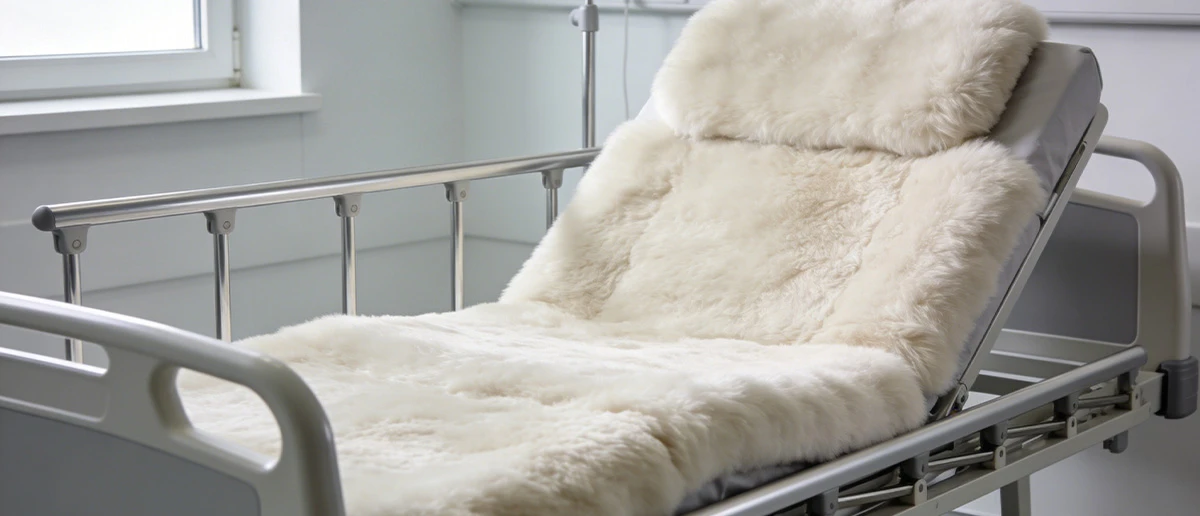
Choosing the right sheepskin for rehabilitation cushions is more than picking a soft material. For healthcare manufacturers, the key factors are resilience and supporting capacity, which determine how well the cushion supports patients under different weights and usage conditions.
Whether you are producing wheelchair cushions, hospital bed pads, or recovery chairs, selecting the correct sheep skin ensures comfort, durability, and long-term satisfaction.
1. When evaluating sheepskin for rehab cushions, focus on the following:
- Resilience: The ability of the sheepskin to recover its shape after compression. High resilience is essential for heavy or frequent use.
- Supporting Capacity: How well the sheepskin supports patient weight without sagging, ensuring proper posture and pressure relief.
- Durability: Ability to withstand repeated use, cleaning, and long-term wear.
- Comfort / Softness: Wool softness contributes to patient comfort but must be balanced with support.
Tip: Do not choose sheep skin based solely on wool length, thickness, or color. Focus on how it performs under realistic patient conditions.
2. Common Sheep Skin Options
Australian Sheepskin (Aussie Sheepskin)
- Characteristics: High resilience, firm support, durable
- Best for: High-frequency or high-weight applications
Merino Sheepskin
- Characteristics: Extremely soft, moderate support, comfort-oriented
- Best for: Light to medium weight patients, comfort-priority cushions
Important: Both types can work for most applications; the difference is how much support and resilience each can provide under actual use conditions.
3. Matching Sheepskin to Product Conditions
Instead of assigning sheep skin by product type, base your choice on patient weight, usage frequency, and intended duration:
- Patient Weight
- Heavier patients → Prioritize higher resilience (Australian sheepskin)
- Lighter patients → Soft Merino may provide sufficient support
- Usage Frequency
- Daily, long-duration use → High-resilience, durable sheepskin
- Occasional use → Softer sheepskin acceptable
- Cushion Duration
- Long periods sitting/lying → Balanced support and softness
- Short-term use → Comfort may be prioritized
Practical Advice: Request sample testing from suppliers to evaluate how the sheepskin performs under compression and repeated use.
4. B2B Purchasing Considerations
- Supplier Reliability: Ensure consistent supply and quality for bulk orders
- Customizability: Can the sheepskin be tailored to cushion sizes and shapes?
- Performance Testing: Look for data on compression resistance and resilience
- Cost vs Performance: Balance budget with long-term durability and patient comfort
5. Conclusion
Selecting the right customizable sheepskin for rehab cushions should be based on real performance under actual usage conditions: resilience, supporting capacity, and durability.
Key steps for B2B buyers:
- Assess patient weight and usage frequency
- Choose Australian or Merino sheepskin based on support and comfort needs
- Test samples to verify resilience and cushioning performance
- Partner with a supplier who can consistently deliver high-quality sheepskin
How do Australian and Merino sheepskins differ in performance?
Australian sheepskin offers higher resilience and firmer support for heavier or frequent use. Merino sheepskin is softer and more comfortable but may provide moderate support.
Can one type of sheep skin work for all rehab cushions?
It depends on patient weight and usage frequency. High-demand applications benefit from firmer, resilient Australian sheepskin, while low-frequency or comfort-priority cushions can use Merino.
How can I test sheepskin for rehab cushions before bulk ordering?
Request sample cushions or pieces from suppliers and perform compression/resilience testing to ensure they meet patient and product requirements.