

What Is Sheepskin Backing Treatment?
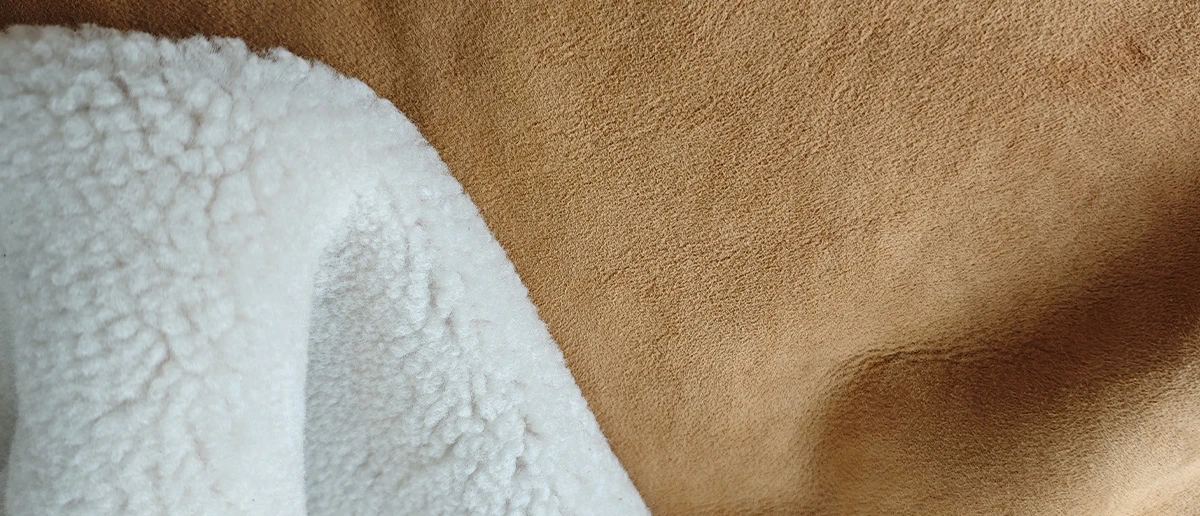
Sheepskin backing treatment refers to the processing and finishing applied to the leather side (back side) of sheepskin or shearling. Unlike wool length, which affects surface appearance and warmth, backing treatment directly influences sewability, thickness consistency, flexibility, and structural stability.
For manufacturers sourcing semi-finished sheepskin, backing treatment is a key technical factor that determines whether the material performs well during cutting, stitching, and large-scale production.
Why Backing Treatment Matters in Shearling Manufacturing
Proper backing treatment helps manufacturers:
- Improve sewing efficiency and reduce needle resistance
- Control leather thickness and batch consistency
- Enhance flexibility or dimensional stability based on application
- Reduce waste and production defects
Backing treatment is particularly important for clothing, gloves, furniture upholstery, and automotive interiors, and is usually specified along with requirements for thickness and wool length. For a complete understanding, please refer to our sheepskin specifications.
Common Types of Sheepskin Backing Treatment
Different applications require different backing conditions. Common backing treatments include:
Natural / Clean Back
Natural clean back retains the original leather surface with minimal processing. It offers excellent flexibility and natural hand feel, making it suitable for garments and gloves where softness is a priority.
Buffed / Sanded Back
Light buffing or sanding smooths the leather surface, improving sewability and handling during cutting and stitching. This treatment is widely used for apparel, shoe lining, and furniture applications.
Shaved / Split Back
Shaving or splitting allows precise control of leather thickness. This process improves consistency across batches and reduces overall material weight, which is essential for semi-finished sheepskin used in mass production or brand OEM projects.
Laminated / Reinforced Back
In some applications, the leather back is reinforced with a thin layer of non-woven fabric or coating to enhance dimensional stability. This treatment is commonly used for furniture upholstery, automotive interiors, and industrial uses.
Backing Treatment by Application
Garments & Gloves
Garments and gloves require high flexibility and smooth sewing performance. Natural or lightly buffed backing is typically preferred, with thickness adjusted through splitting when necessary.
Furniture & Upholstery
Furniture applications prioritize durability and shape stability. Buffed or reinforced backing treatments help improve performance during upholstery and long-term use.
Automotive & Industrial Use
Automotive interiors and industrial products often require enhanced stability and uniformity. Reinforced or laminated backing treatments are commonly applied to meet these requirements.
Backing Finish vs Wool Length vs Leather Thickness
These three sheepskin specifications are often confused but serve different functions:
- Wool length (pile length): affects warmth, appearance, and comfort
- Leather thickness: determines flexibility, strength, and sewing behavior
- Backing treatment: controls how the leather side performs during manufacturing
Understanding the relationship between these factors helps buyers specify materials more accurately and avoid production issues.
Custom Backing Treatment for Semi-finished Sheepskin
Backing treatment is not a one-size-fits-all specification. For semi-finished sheepskin, backing finish is typically customized based on application, processing method, and production requirements.
For buyers sourcing semi-finished sheepskin customization, backing treatment should be confirmed during sampling to ensure optimal performance in final manufacturing.