

Why Thickness and Wool Length Are Often Confused
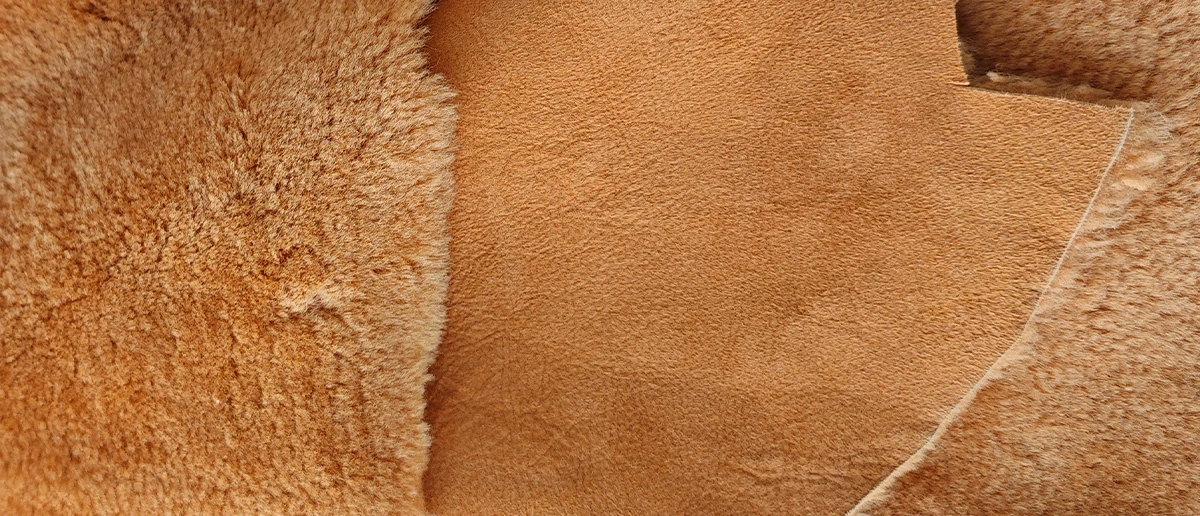
When sourcing sheepskin for manufacturing, many buyers often confuse sheepskin thickness with wool length. While these two parameters both relate to the material’s quality, they refer to completely different properties that play a crucial role in manufacturing. The thickness refers to the leather side, while wool length refers to the visible wool fibers. These two properties need to be specified separately, and each affects the manufacturing process differently.
For more detailed specifications, refer to our sheepskin leather specifications page.
What Is Sheepskin Thickness?
Thickness Refers to the Leather Side, Not the Wool
Sheepskin thickness is measured on the leather side of the material. This measurement typically ranges from 0.7 mm to 1.5 mm, depending on the application. For example, apparel and footwear require thinner leather (around 0.7-1.0 mm), while upholstery and automotive interiors often require thicker leather (1.2 mm or more).
Sheepskin thickness plays a key role in determining how the material will perform during the manufacturing process. Thicker sheepskin is more rigid and holds its shape better, while thinner sheepskin is more flexible and easier to stitch.
Typical Thickness Ranges for Manufacturing
Different industries require different thicknesses for their products. Here’s a quick overview:
- Apparel: 0.7–1.0 mm
- Footwear & Gloves: 0.8–1.2 mm
- Furniture / Upholstery: 1.2–1.5 mm
- Automotive Interior: Consistency > Thickness
Thickness is a critical factor in the durability, flexibility, and overall performance of the product.
Why Thickness Matters in Production
The thickness of the sheepskin affects several key aspects of the manufacturing process:
- Sewing performance: Thicker sheepskin requires stronger stitching and more careful handling.
- Cutting yield: Thicker materials may be more difficult to cut and may produce more waste.
- Adhesion with other materials: Thicker sheepskin may require additional steps in bonding or lamination.
What Is Wool Length?
Wool length, also known as pile length, refers to the visible length of the wool fibers on the surface of the sheepskin. This measurement is typically taken from the tips of the wool fibers to the base where they are attached to the leather. Wool length can vary significantly depending on the breed of sheep and the type of processing used.
Typical Wool Length by Application
- Gloves: 0.8–1.0 cm
- Apparel: 1.0–1.8 cm
- Furniture: 1.5 cm (curly sheepskin usually shorter)
- Rugs: 3.5 cm–6 cm
Wool length impacts not only the appearance of the product but also its thermal insulation properties, comfort, and durability.
Why Wool Length Matters for End Products
Wool length plays a critical role in the finished product’s feel, comfort, and thermal performance. Longer wool creates a softer and warmer product, making it ideal for products like blankets, sheepskin gloves, or rugs. Shorter wool lengths are better for products where texture and appearance are more important than insulation.
Thickness vs Wool Length: Key Differences
| Parameter | Sheepskin Thickness | Wool Length |
|---|---|---|
| Measured on | Leather side | Wool fibers |
| Unit | mm | cm |
| Affects | Sewing, cutting | Comfort, appearance |
| Adjustable | Yes (splitting possible) | Limited (shearing only) |
How Thickness and Wool Length Work Together in Manufacturing
Thickness and wool length are two independent yet complementary specifications. To create a high-quality finished product, manufacturers must consider both parameters in tandem. For example, for automotive interiors, you need to balance thickness and wool length to ensure the material is durable yet still offers comfort. Similarly, for apparel or gloves, the wool length is more important for comfort, while thickness ensures durability and ease of sewing.
Learn more about how sheepskin backing treatment works with wool length and thickness in our Backing Treatment page.
Common Mistakes Buyers Make
- Only asking for thickness: Buyers sometimes only specify the thickness of sheepskin and forget to mention wool length, which leads to issues with comfort and insulation.
- Confusing wool length with thickness: This is a common mistake. Wool length affects comfort, while thickness impacts durability and sewing performance.
- Ignoring backing treatment: The backing finish is often overlooked, but it’s essential for performance and longevity.
How to Specify the Right Combination for Your Project
- Understand the application: Are you making apparel, footwear, upholstery, or automotive interiors?
- Confirm wool length: What is the required wool length for comfort and thermal performance?
- Specify thickness: Based on durability and manufacturing needs, specify the thickness of the sheepskin.
- Consider backing treatment: Ensure the sheepskin backing treatment complements the wool length and thickness.
If you’re sourcing semi-finished sheepskin, make sure to specify the wool length and thickness that suit your manufacturing needs. You can start by discussing your requirements through our semi-finished sheepskin customization process.——Contact Us