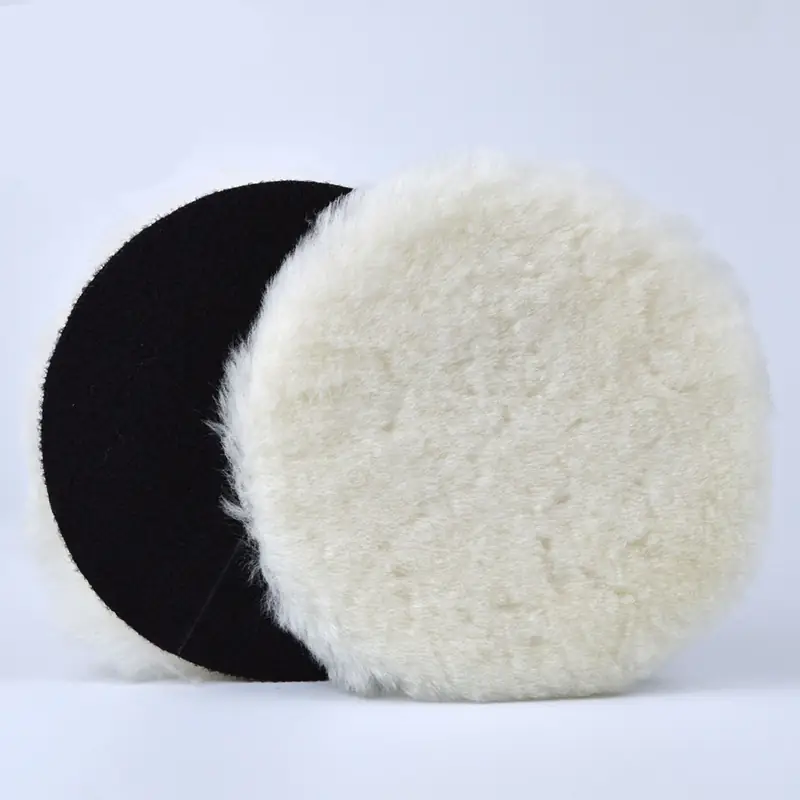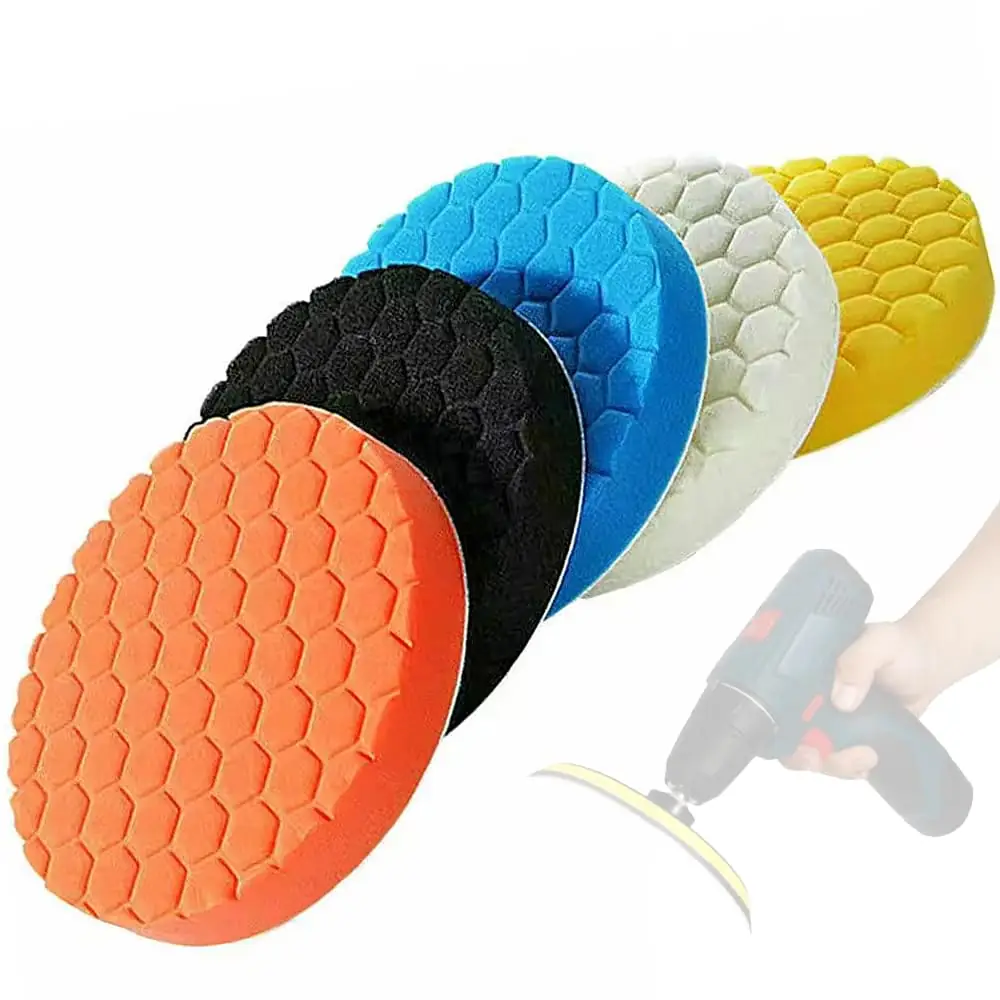


wool pad vs foam pad, Facing these two different pads on the polishing machine, Which one do you pick? Forget complex theories. Let’s talk real use: what each pad does best, its downsides, and exactly what kind of paint condition it’s for. Choose wrong, and you might waste time or worse, hurt your car’s finish.
Part 1: The Wool Pad – Your Paint’s “Emergency Responder”
What It’s REALLY Good For (The Pros):
- Heavy-Duty Correction: This is its main job. A wool pad cuts fast and aggressively. It’s your go-to for severe oxidation (chalky, dull paint), deep swirls, heavy scratches, and totally neglected old paint.
- Saves Time on Big Jobs: Because it removes defects quickly, professionals love it for restoring large, badly damaged surfaces efficiently.
- Manages Heat Well: The open wool fibers can dissipate heat during long, intense cutting sessions (in skilled hands).
The Downsides & Risks (The Cons):
- Skill Required – NOT for Beginners: You must control your polisher’s speed, pressure, and movement perfectly. If you don’t, you can easily burn through the clear coat. This damage is permanent.
- Always Needs a Follow-Up: Wool pads almost always leave behind holograms or fine swirl marks. You must use a finer polish with a foam pad afterward to get a perfect, shiny finish. It’s never a one-step process.
- Paint Type Matters: It’s best for thick or very hard clear coats. Using it on soft paint (common on many Japanese cars) is extremely risky.
Best For This Paint Condition:
- USE IT FOR: Major paint defects on old, uncared-for vehicles. The first, aggressive cutting stage in a professional multi-step correction.
- DO NOT USE FOR: Regular maintenance, light scratches, soft paint, or if you’re new to detailing.
Part 2: The Foam Pad – Your Paint’s “Complete Care System”
What It’s REALLY Good For (The Pros):
- A Pad for Every Job: This is the biggest advantage. Foam pads come in types that work together perfectly:
- Cutting Pads (Orange/Yellow): For removing moderate swirls and light scratches. Safer and more controlled than wool for common problems.
- Polishing/Finishing Pads (White/Blue): For removing the tiny marks left by a cutting pad and bringing back deep gloss. This step is key for a mirror finish.
- Finishing/Waxing Pads (Black/Red): Ultra-soft. Perfect for applying wax, sealants, or coatings without leaving streaks.
- Safe & User-Friendly: Much more forgiving on paint. The foam has cushion, which lowers the risk of cutting too deep. This makes it the #1 choice for DIYers.
- Delivers Flawless Results: With the right compound or polish, a foam pad system can handle the entire process—from correction to protection—leaving behind a deep, hologram-free shine.
The Downsides & Limits (The Cons):
- Has a Cutting Limit: On the worst paint damage, a foam pad might struggle. It would take a very long time, which is why pros use wool first for extreme cases.
- Less Durable: Foam breaks down over time. After many uses and cleanings, it can get soft, tear, or fall apart. You’ll replace foam pads more often than wool.
- You Need a Few: To get perfect results, you typically need 2-3 different foam pads for the complete job. There’s a small learning curve.
Best For This Paint Condition:
- USE IT FOR: Light to moderate paint defects (covers 90% of daily drivers). The final polishing and waxing stage on ANY car. All soft-paint vehicles. Every level of DIY detailer.
- DO NOT USE FOR: Rapid restoration of severe industrial-grade paint damage (take that to a pro).
The Final Verdict: wool pad vs foam pad, Your Simple Choice Guide
Stop asking “which is better?” Start asking: “What’s my paint’s condition, and what’s my goal?”
- You drive a daily car with some swirls and light scratches. You want to make it shine yourself.
→ Get a FOAM PAD KIT (Cut, Polish, Finish). This is the safest, most effective, and easiest way to learn. - You’re a seasoned detailer facing a badly damaged paint job and need to work fast.
→ Start with a WOOL PAD for heavy cutting, but you MUST follow up with foam polishing pads to finish. - You’re a total beginner just looking to apply wax or do a yearly refresh.
→ All you need is one soft, black or red FINISHING FOAM PAD.
Quick Decision Chart:
Does your paint have DEEP SCRATCHES / SEVERE OXIDATION?
→ YES → Are you an experienced professional? → YES → Consider a wool pad for STAGE 1 CUTTING.
→ NO → Seek a professional detailer.
→ NO → Does your paint have NORMAL SWIRLS / LIGHT SCratches? → YES → Use a CUTTING & POLISHING FOAM PAD SET.
→ NO → Use a FINISHING FOAM PAD for cleaning and protection.
Bottom Line: For the vast majority of car owners, foam pads are the truly “more practical” choice. They let you safely and predictably go from correction to showroom shine in your own garage. Start with foam, master the process, and you’ll achieve amazing results.
To learn more about wool polishing pads, please see this article.
- IS a wool pads good for polishing,80% of people are thinking about it
- How to Clean Your Wool Polishing Pads -6 simple steps