

You’ve done it before. You grab a duster, run it along the bookshelf, and watch a little cloud of dust drift lazily into the air — only to settle right back down five minutes later. It’s one of the most frustrating loops in household cleaning. The problem usually isn’t you. It’s the duster.
Most cheap dusters, whether synthetic microfiber or old-school plastic bristles, don’t actually trap dust. They just relocate it. Natural wool, on the other hand, is structurally designed to do the opposite. Here’s everything you need to know.
What Makes Natural Wool Different?
Wool fibers have a microscopic structure unlike any synthetic alternative. Each individual strand is covered in tiny overlapping scales — similar to roof tiles — and the fiber itself carries a natural lanolin coating. These two properties work together in a way no factory-made material has managed to replicate at the same cost.
“Wool doesn’t just pick dust up — it holds it. You’re not just moving the problem. You’re solving it.”
Natural static electricity
As you move a wool duster through the air, the fibers build up a mild electrostatic charge. Dust particles carry an opposite charge, so they’re physically attracted to the wool and cling to it rather than scattering. This happens without any sprays, treatments, or electricity.
Lanolin — nature’s dust trap
Raw wool contains lanolin, a waxy natural oil produced by sheep. Even after processing, wool retains enough lanolin to give the fibers a slightly tacky surface at the microscopic level. Dust embeds into the fiber rather than sitting on top of it, which is why a gentle shake outside releases the trapped dust cleanly.
Fiber structure that breathes
The scale-like structure of each fiber also means a wool duster is naturally airy and three-dimensional. It reaches into corners, around knobs, and over irregular surfaces with very little effort. Synthetic dusters tend to flatten with use; wool springs back.
🐑 Our dusters are made from 100% natural wool — no synthetic blends, no chemical treatments. Shop Wool Dusters →
Natural Wool vs Synthetic: A Straight Comparison
| Feature | Natural Wool Duster | Synthetic / Microfiber | Feather Duster |
|---|---|---|---|
| Dust capture | ✅ Traps & holds dust | Traps some, scatters rest | ❌ Mostly scatters dust |
| Static buildup | ✅ Natural electrostatic | Variable (can be added) | ❌ Minimal |
| Safe for surfaces | ✅ Extremely gentle | Generally safe | Can scratch with quills |
| Durability | ✅ Years with proper care | 6–18 months typical | ❌ Brittle over time |
| Eco-impact | ✅ Renewable & biodegradable | ❌ Petroleum-based | Varies by source |
| Price point | Mid-range (long-lasting) | Low upfront, replace often | Low–mid |
Choosing the Right Size
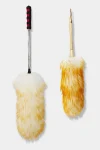
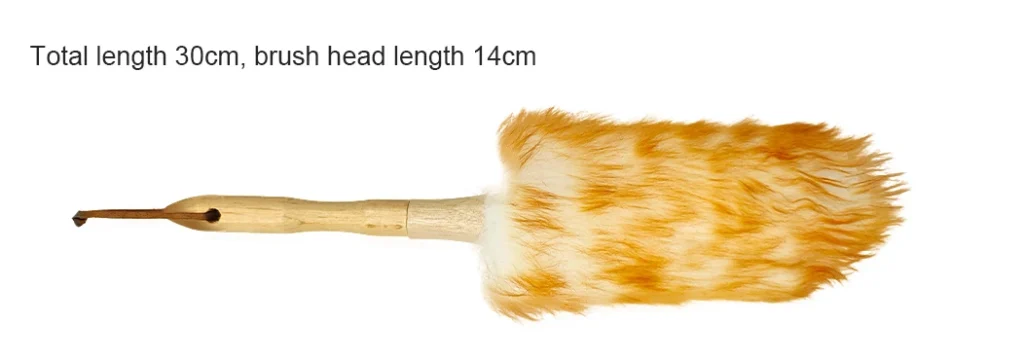
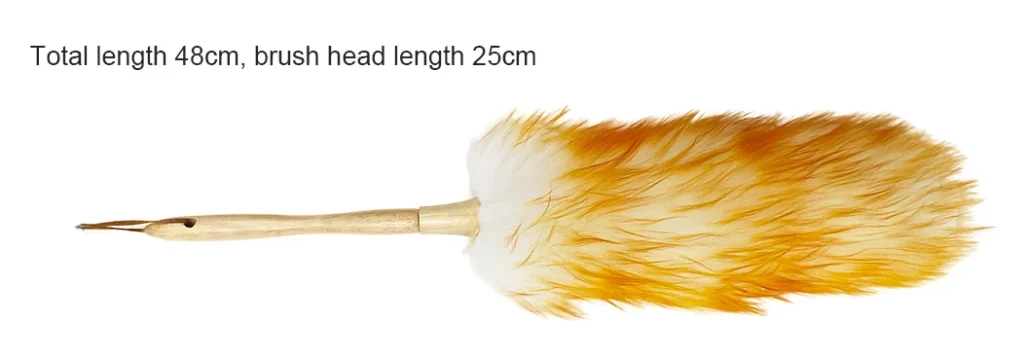
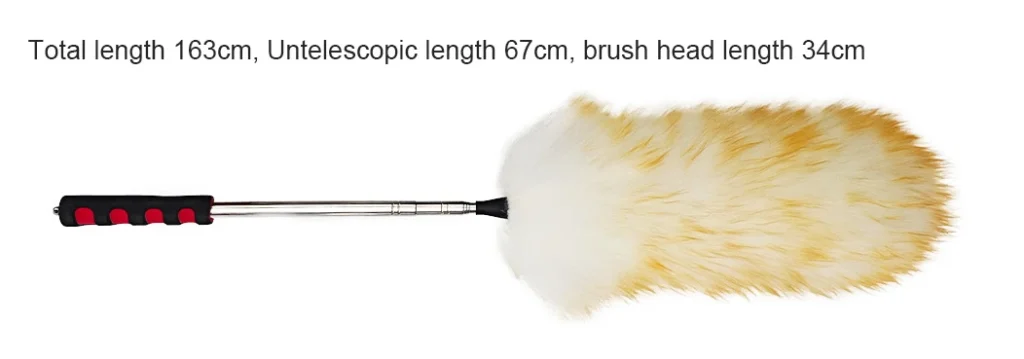
One of the biggest mistakes people make is using a single duster for every job. Different spaces need different reach and density. That’s why having access to multiple sizes isn’t just a nice-to-have — it genuinely changes how effective your cleaning is.
Small — Detail & Desk Keyboards, figurines, picture frames, electronics, tight shelving gaps. Maximum control, minimal disruption.
Medium — Everyday Surfaces Countertops, bookshelves, window sills, furniture, TV screens. The workhorse size most households reach for daily.
Large — Ceiling & High Reach Ceiling fans, crown molding, tall wardrobes, light fixtures, and wall art. Makes overhead cleaning fast and easy.
XL — Wide Coverage Blinds, garage shelving, large bookcases, and open storage. Cover more surface area with fewer passes.
💡 Pro Tip: If you’re buying one duster for the first time, start with a medium. If you have high ceilings or ceiling fans, pair it with a large on an extendable handle. Most homes use 2–3 sizes regularly.
📦 Available in 4 sizes — find the right fit for every room in your home. View All Sizes →
Where to Use Your Wool Duster
Ideal surfaces
- Hardwood and lacquered furniture
- Glass and mirrors (dry dusting before wiping)
- Blinds and shutters — wool conforms to slat edges
- Electronics: TVs, monitors, keyboards, speaker grilles
- Decorative objects, ceramics, framed art
- Ceiling fans and light fittings
- Baseboards and moldings
- Car dashboards and interior trim
How to Care for Your Wool Duster
A quality wool duster, properly maintained, will last for years. Here’s how to keep it performing like new.
After every use
Take the duster outside and give it a few gentle shakes to release trapped dust. Don’t beat it against a hard surface — this can damage the fibers over time. A gentle flick is all it needs.
Deep cleaning (every 2–4 weeks)
Fill a basin with cool water and a small amount of mild wool wash or baby shampoo. Swish the duster gently — don’t scrub or wring. Rinse thoroughly with cool water. Squeeze out excess water carefully, then reshape the duster and hang it to air-dry completely before storing. Never use hot water or machine wash, as this will felt the fibers and ruin the duster’s structure.
Storage
Store upright or hanging so the fibers stay fluffy and round. Laying it flat under other items will compress and permanently flatten the head. A simple hook inside a cleaning cupboard works perfectly.
Frequently Asked Questions
Is a wool duster good for people with allergies? Yes — because wool actually traps dust rather than dispersing it into the air, it tends to be better for allergy sufferers than feather dusters or synthetic alternatives that scatter particles. For best results, shake the duster outside immediately after use so captured allergens don’t re-enter the room.
Will it scratch delicate surfaces like LCD screens or polished wood? Natural wool fibers are among the softest cleaning materials available. Our dusters are safe for screens, polished furniture, lacquerware, and antiques. Always use gentle, light strokes rather than pressing firmly.
How long does a natural wool duster last? With proper care — gentle washing every few weeks and correct storage — a high-quality wool duster typically lasts 3–5 years. This makes it significantly more cost-effective than synthetic alternatives despite the higher upfront cost.
Does the size of the duster matter for effectiveness? Yes, noticeably. A duster that’s too small for a large surface means more passes and more effort. A duster that’s too large for a tight space can’t reach into corners. Matching the size to the task is one of the most underrated cleaning habits.
What’s the difference between your wool and cheap alternatives? Many budget “wool” dusters are blended with synthetic fibers or use processed wool that has had the lanolin stripped out. Our dusters use 100% pure natural wool that retains its lanolin, which is what gives wool its natural dust-attracting and dust-holding properties.
Can I use it on ceiling fans without standing on a ladder? Our large and XL dusters are compatible with standard extendable handles (most sold separately). They’re specifically designed to clean ceiling fan blades from floor level — one of the most awkward dusting jobs made easy.
The Bottom Line
If you’ve ever felt like dusting was a futile exercise — you’re not wrong, but the tool is usually to blame. Natural wool works differently from every synthetic alternative because it was designed by nature to handle fine particles, not by a factory trying to hit a price point.
The combination of natural lanolin, a self-charging electrostatic effect, and a three-dimensional fiber structure means dust goes in and stays in until you shake it out. Pair the right size with the right surface, wash it occasionally, and a good wool duster will quietly become one of the most reliable tools in your home for years to come.