
A practical sourcing guide for fashion brands, home goods buyers, footwear brands, and wholesalers
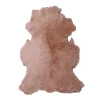
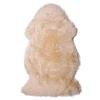
When sourcing wool-on sheepskin for your products, one of the first decisions you’ll face is breed selection: Merino sheepskin or regular sheepskin? Both are natural, wool-on products — but they differ significantly in feel, appearance, performance, and price.
What Is Merino Sheepskin?
Merino sheepskin comes from Merino sheep, a breed originally from Spain and now widely farmed in Australia, New Zealand, and South Africa. Merino is widely regarded as producing the world’s finest natural wool.
Key characteristics:
- Wool fiber diameter: 15–24 microns — extremely fine, soft against bare skin
- Texture: Dense, uniform, with a natural crimp and loft
- Feel: Luxuriously soft — no prickling or irritation
- Temperature regulation: Excellent — naturally adapts to body temperature
- Moisture management: Wicks moisture away from skin efficiently
- Natural odor resistance: Wool’s lanolin content inhibits bacterial growth
Merino sheepskin is the material of choice for premium brands where tactile softness and skin-contact comfort are non-negotiable.
What Is Regular Sheepskin?
“Regular sheepskin” typically refers to hide from crossbred sheep — breeds developed for meat production rather than fine wool. Common breeds include Corriedale, Suffolk, Dorset, and various regional crossbreeds.
Key characteristics:
- Wool fiber diameter: 25–35+ microns — coarser than Merino
- Texture: Fuller, longer staple, with more visible variation
- Feel: Warm and substantial — may feel slightly coarser in direct skin contact
- Durability: Generally more robust, with a thicker hide
- Natural loft: Often higher and more voluminous than Merino
- Cost: Lower per hide, making it more cost-efficient for mid-market products
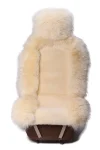
Regular sheepskin is widely used in home goods, automotive accessories, rugs, and products where warmth, loft, and durability matter more than extreme softness.
| Factor | Merino Sheepskin | Regular Sheepskin |
|---|---|---|
| Wool fineness | 15–24 microns (ultra-fine) | 25–35+ microns (medium–coarse) |
| Softness | Exceptionally soft, skin-friendly | Warm and full, slightly coarser |
| Wool density | Dense and uniform | Fuller loft, more voluminous |
| Durability | Moderate | Higher — thicker hide |
| Warmth | Excellent | Excellent |
| Best for | Apparel, baby products, footwear linings, premium accessories | Rugs, seat covers, outerwear, home goods, mid-market garments |
Which Should You Choose?
Choose Merino sheepskin if:
- Your product has direct skin contact — apparel linings, baby mats, medical sheepskin, footwear insoles
- You’re building a premium or luxury brand where material story and tactile quality matter
- Your buyers are willing to pay for certified fine wool — Merino’s provenance is a marketable asset
- You’re targeting fashion-forward markets in Europe, North America, or Japan
Choose regular sheepskin if:
- Your product prioritizes volume, loft, and warmth over ultimate softness — rugs, throws, seat covers
- You need competitive pricing for mid-market or value retail channels
- Your buyers are wholesalers or distributors who need consistent supply at scale
- The product design features outer-facing wool where visual fullness matters more than micron count
What to Ask Before Placing an Order
- Breed and origin — where are the hides sourced from? (Australian Merino commands premium positioning)
- Tanning method — vegetable vs chrome tanning affects both feel and sustainability story
- Wool length options — full long-wool or shearling (clipped)?
- Leather side finish — suede, nappa, or brushed?
- Sample availability — always request wool-on samples before committing to bulk
As a source factory specializing in wool-on sheepskin and shearling, we supply both Merino and crossbred sheepskin to brands, wholesalers, and retail chains worldwide. Every order — whether OEM or ODM — is customizable across breed, wool length, leather finish, color, and size.
Ready to Source?
Tell us your product category, target market, and volume — and we’ll recommend the right sheepskin for your brand.