
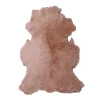
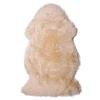
When dealing with the unique Tibetan sheepskin of China, understanding its distinctive grading system is key to ensuring quality procurement and fair trade.
Tibet lambskin Core Quality Grading Standards (Based on Chinese National Standard GB/T 14629.3)
The quality of Tibetan lambskin(tan sheepskin) in China is primarily graded based on Tibetan sheepskin fur (referring to the pelt of lambs around 30-45 days old, with a hair length typically ≥ 7 cm). The following is an overview of the key official grading indicators:
Quick-Reference Table for Tibetan sheepskin fur Quality Grades
| Grade | Natural Hair Strand Length (≥ cm) | Number of Curls (≥) | Skin Area (≥ cm²) | Key Characteristics of Appearance & Feel |
|---|---|---|---|---|
| Special Grade | 8.5 | 6 | 2700 | Skin is tough yet thin, hair patterns are tight, luster resembles silk, feel is exceptionally plush. |
| Grade 1 | 8.0 | 5 | 2400 | Good skin quality, compact hair pattern structure, oily shine, soft feel. |
| Grade 2 | 7.5 | 4 | 2200 | Skin is slightly thinner or less uniform, hair patterns are looser, luster and feel are somewhat inferior. |
| Off-Grade | Does not meet the requirements of any grade above, or has obvious defects. |
Key Term Explanations:
- Curly Patterns / Curls: Refers to the elegant, wavy curls naturally formed by the hair strands, More curls with uniform curvature indicate higher quality.
- Skin Quality: Refers to the texture of the leather itself. Superior skin quality should have tight fibers, uniform thickness, be rich in oils, and possess good elasticity.
Five-Step Practical Identification Method: From Inspection to Decision
You can follow these steps for systematic evaluation when inspecting goods or samples:
Step 1: Examine the Hair Surface and Curl Structure
Observe under even lighting. High-quality Tibet lambskin should display a uniform, lustrous white or jet-black color (only minimal off-color hair on the head/neck of the lamb is permitted). The hair strands (curly patterns) should have clear boundaries, forming multiple even, natural ‘S’-shaped curls from root to tip, arranged in neat rows. Avoid pelts with yellowish, dull hair color or disordered, sparse curls.
Step 2: Assess the Feel and Elasticity
Stroke with your palm, both with and against the nap. Top quality should offer a silky, cool, and plush sensation. The roots of the hair strands should feel soft, easily bending in all directions and springing back quickly. Feel the skin side (back); it should feel thin, soft, and pliable, not thick, stiff, dry, or fragile.
Step 3: Check Skin Integrity
Spread out the pelt and check the uniformity and presence of any defects. Pay close attention to the main central area for cuts, scratches, moth holes, scars, or thin spots from over-stretching. Defects in primary areas significantly affect durability and value.
Step 4: Distinguish Between Types and Imitations
- Confirm the Type: Ensure you are sourcing the mainstream “Tibetan sheepskin fur“. The younger “Tibet Lamb Fur” has hair shorter than 7 cm, fewer curls, and is thinner/lighter, but it does not fall under the above grading standard and has different value.
- Identify Genuine Product: Genuine Tibet lambskin has independent, non-clumping hair roots that form distinct strands. It can be distinguished from the somewhat similar-looking Chekiang Sheepskin, whose fibers tend to clump together more, forming different pattern shapes.
Step 5: Verify Documentation and Origin
Request documentation from the supplier that clearly states the grade. Traceability to core producing regions in Ningxia (like Yanchi, Yinchuan) is a plus. Pelts from these regions typically represent optimal quality due to breed, climate, and pasture conditions.
Additional Advice for International Buyers
- Communicate Standards Clearly: In inquiries and purchase orders, explicitly specify the required Chinese National Standard grade (e.g., GB/T Grade 1), rather than vague terms like “high quality”, to prevent misunderstandings.
- Consider Performance Indicators: For applications with strict requirements, inquire about physical performance (e.g., tensile strength, tear force) and chemical safety indicators (formaldehyde, azo dye content), which are also regulated by the national standard.
- Keep Reference Samples: Before large purchases, always obtain and mutually approve and seal physical samples to serve as a benchmark for final inspection.
- Understand Price Differences: Significant price gaps exist between grades. Special Grade suits high-end fashion and luxury goods; Grade 1 is ideal for quality finished products; Grade 2 is suitable for items with less stringent appearance requirements.
The ultimate rule for identifying Tibet lambskin lies in a comprehensive judgment: elegant curly patterns, pleasing hair luster, thin yet strong skin, and a rich, silky feel. Mastering these points will give you greater confidence in selecting cost-effective Tibet lambskin raw materials in the Chinese market.
If you have specific product applications in mind, such as coats, jackets, or accessories, or if you would like to understand the subtle differences between various producing regions, please feel free to share your needs with us. We can then provide you with a tailored solution.
Explore our custom-tailored Tibet shearling solutions, designed exclusively for luxury houses.